Menu
Same-Day Service Available!

Hardwood floors can completely shape the feeling of a room. When they are clean and well cared for, they add warmth, character, and a polished appearance that works with almost any style of home. However, even beautiful hardwood can eventually start looking dull, cloudy, scratched, or worn.
For many homeowners, the change seems to happen gradually. One day the floors look bright and smooth, and a few months later they seem less reflective. High-traffic areas may appear darker. Certain rooms may look hazy even after mopping. Small scratches become easier to notice, while areas near doors and furniture begin to show signs of everyday wear.
This does not always mean the wood itself is permanently damaged.
In many cases, dullness comes from layers of soil, residue, oils, dust, improper cleaning products, moisture, and everyday foot traffic collecting on or affecting the surface. Because hardwood requires different care than carpet, tile, or vinyl, even well-intentioned cleaning habits can sometimes leave floors looking less attractive over time.
For homeowners in Shavano Park, Texas, 78231, understanding what causes hardwood floors to lose their shine can make regular maintenance much easier. Once you know whether the problem comes from dirt, residue, moisture, scratches, worn finish, or a combination of issues, you can choose a more appropriate cleaning approach.
Professional hardwood floor cleaning can also help when ordinary household maintenance is no longer producing the appearance you want.
This guide explains the most common causes of dull and worn-looking hardwood floors, what homeowners can do to reduce buildup, which cleaning habits may create problems, and when professional cleaning may be worth considering.
One of the biggest reasons hardwood floors lose their original appearance is simple everyday use.
Every person who walks through the home brings small particles with them. Dust, outdoor soil, sand, pet debris, and other fine material can enter through doors and become scattered across the floor.
At first, those particles may be difficult to see. However, as people continue walking over them, the debris can rub against the floor finish.
Over time, this repeated friction may make high-traffic areas appear less glossy than portions of the room that receive very little use.
Hallways, kitchen walkways, entrances, living room paths, and areas around dining tables often show wear first because they receive the most movement.
The difference becomes especially noticeable when sunlight reflects across the flooring. One section may still appear smooth and bright while another looks cloudy or slightly scratched.
Regular hardwood floor cleaning and routine dry soil removal can help reduce the amount of abrasive debris being moved across the floor.
Outdoor soil may look harmless, but fine grit can be surprisingly abrasive.
Small particles trapped under shoes, socks, furniture legs, or pet paws can move across the surface throughout the day.
When those particles are repeatedly pressed against the finish, they may create tiny scratches.
A single small scratch might not be noticeable. Hundreds of micro-scratches, however, can affect how light reflects from the floor. The surface may begin looking dull or worn even when it is technically clean.
This is one reason regular sweeping, dust mopping, and vacuuming are so important.
Removing dry soil before wet cleaning prevents grit from being dragged around the room.
Entry mats can also make a meaningful difference because they help capture soil before it reaches the hardwood.
Sometimes the floor does not need a heavy cleaning treatment at all.
It simply needs better dust removal.
Fine dust settles onto hardwood just like it settles on furniture, countertops, rugs, and other household surfaces. Because hardwood is relatively flat and smooth, even a light layer can affect its appearance.
A dark wood floor may show light-colored dust quickly, while lighter flooring may hide it until sunlight reaches the surface.
Dust can also gather along baseboards, beneath furniture, and in corners that are easy to overlook.
The U.S. Environmental Protection Agency recommends routine cleaning of household surfaces, including dusting hard surfaces and damp-mopping floors as part of general indoor maintenance.
A regular dust-removal routine is one of the easiest ways to keep hardwood looking cleaner between deeper cleaning visits.
Using more cleaning solution does not automatically make hardwood cleaner.
In fact, too much product is one of the most common reasons a floor begins looking hazy or sticky.
When concentrated cleaner is applied heavily, some of it can remain behind after the floor dries. Each new cleaning may add another thin layer.
Eventually, this residue can affect how light reflects from the surface.
The floor may look cloudy even immediately after cleaning.
Homeowners sometimes respond by adding even more cleaner because they assume the haze is dirt. Unfortunately, this can create an ongoing cycle of residue buildup.
Always follow the cleaning product manufacturer’s dilution and application instructions.
The EPA also advises homeowners to read labels carefully, use products at the correct strength, and verify that a cleaner is compatible with the surface being treated.
When a floor looks worse after repeated mopping, cleaning product residue may be part of the problem.
Hardwood flooring has specific care requirements.
A cleaner designed for tile, vinyl, countertops, or another surface is not automatically appropriate for wood.
Strong chemicals, aggressive degreasers, abrasive cleaners, and certain household mixtures may affect the floor finish.
Some products leave residue. Others may change the gloss level or make the floor look uneven.
Even products marketed as multipurpose cleaners should be checked carefully before use.
The label should specifically indicate whether the product is compatible with your type of finished hardwood flooring.
If you are uncertain, check the flooring manufacturer’s recommendations or test the product in a hidden area.
A small amount of caution can help prevent a cleaning attempt from turning into a finish problem.

Mopping feels like the obvious answer when hardwood looks dirty.
However, repeated wet cleaning can sometimes contribute to dullness when soil is not removed first or the mop water becomes dirty.
Imagine mopping a floor covered with dust and fine grit.
Once water is introduced, those particles can mix with the cleaning solution. If the mop is repeatedly moved across the room without being rinsed properly, some of that material may simply be redistributed.
The floor may dry with a cloudy film.
For better results, remove loose debris before damp cleaning.
Vacuum or dust mop first.
Then use the correct hardwood-safe cleaning process and avoid soaking the surface.
Wood and excessive moisture are not a good combination.
Hardwood floors generally should not be flooded or left visibly wet for long periods.
Water may enter seams, gaps, scratches, or areas where the finish has worn.
Depending on the flooring and the amount of moisture involved, excessive water can contribute to swelling, cupping, discoloration, or other damage.
Even when permanent damage does not occur, using too much water during cleaning can leave streaks or dull areas behind.
A damp cleaning method is very different from leaving standing water on the floor.
Use controlled moisture and dry unexpected spills quickly.
Leaks, appliance problems, plumbing issues, and pet accidents deserve prompt attention as well.
In some homes, the water itself may contribute to a cloudy appearance.
Hard water contains dissolved minerals.
When water evaporates, some minerals can remain on surfaces.
Repeated wet cleaning with mineral-heavy water may contribute to spotting or residue, especially if too much moisture is used.
The exact effect depends on the flooring finish, water quality, cleaning method, and products being used.
If your floors consistently look hazy after mopping, pay attention to whether the appearance develops as the moisture dries.
This can provide an important clue about the cleaning process.
Not every source of dullness comes from dust.
Body oils and cooking residue can also collect on hardwood.
Bare feet can transfer small amounts of natural skin oil to the floor. Pets may leave oils behind. Cooking activity can release fine airborne grease that eventually settles onto nearby surfaces.
Areas around kitchens, dining spaces, and favorite walking paths may therefore become dull or slightly sticky.
Because oil attracts additional dirt, the problem can gradually become more visible.
Appropriate hardwood floor cleaning can help remove this type of buildup without relying on overly aggressive chemicals.
Pets add a lot of happiness to a home, but they can also bring outdoor debris indoors.
Dogs may walk through grass, dirt, sand, or damp areas before coming inside.
Those particles can then transfer to hardwood floors.
Pet nails may also contribute to visible scratches, particularly when dogs run, turn quickly, or play indoors.
Keeping nails maintained and wiping dirty paws before pets enter high-use areas can help reduce unnecessary wear.
Pet accidents should also be cleaned promptly.
Urine and moisture should not be allowed to remain on hardwood because liquid may reach seams or areas where the finish is worn.
Pet accidents on carpet often lead homeowners to search for pet urine removal, pet odor removal, dog urine removal, cat urine removal, or pet urine carpet cleaning.
On hardwood, the concern is slightly different.
Urine is still a source of odor, but moisture can also reach seams, gaps, scratches, or vulnerable sections of the finish.
If an accident happens, absorb the liquid quickly.
Use an appropriate cleaning method for the flooring rather than repeatedly flooding the area.
If urine has affected nearby carpet or rugs as well, professional pet stain and odor removal may be useful.
Pet accident cleaning often involves more than one surface in a room, especially in homes where carpet, rugs, and hardwood meet.
Furniture is another common source of scratches and dullness.
Dining chairs are especially tough on hardwood because they move back and forth repeatedly.
A chair leg with worn or missing protective padding can create scratches every time someone sits down.
Sofas, tables, beds, and heavy furniture can also mark the floor when moved without protection.
Adding appropriate felt pads or other floor-safe protectors beneath furniture legs can reduce direct friction.
Check them periodically because protective pads can collect grit or wear down.
When moving heavy furniture, lift it whenever practical rather than dragging it across the floor.
Not every type of footwear affects hardwood equally.
High heels can place significant pressure on a very small contact area.
Damaged heel tips may also expose harder components that can dent or scratch some flooring.
Outdoor shoes can bring additional grit and soil indoors.
Encouraging family members and guests to leave heavily soiled footwear near the entrance can help reduce both dirt and abrasion.
This simple habit also benefits carpeting and area rugs throughout the home.
Sometimes a floor looks uneven even though cleaning is not the problem.
Sunlight can change the color of certain wood species and finishes over time.
Areas directly exposed to strong sunlight may become lighter, darker, or simply different from sections protected by rugs and furniture.
When a rug is moved after several years, homeowners may notice a clear color difference underneath.
This is not surface dirt and cannot necessarily be corrected through hardwood floor cleaning.
However, rotating rugs and adjusting window coverings can help promote more even exposure.
Understanding whether you are dealing with soil or natural color change prevents unnecessary cleaning attempts.
Hardwood floor finish does not last forever.
Over time, regular foot traffic and cleaning gradually affect the protective surface.
When the finish becomes worn, the flooring may lose some of its original gloss.
High-traffic paths usually show the change first.
Professional cleaning can remove soil and residue, but it cannot recreate finish that has been physically worn away.
When the finish itself is deteriorated, the floor may need restoration, recoating, or refinishing rather than cleaning alone.
Knowing the difference helps homeowners set realistic expectations.
A floor covered with tiny scratches often looks duller than a smooth floor, even when both are equally clean.
That happens because scratches interrupt the way light reflects across the surface.
Some scratches are only in the finish, while deeper marks may reach the wood.
Routine cleaning may make the floor look better by removing soil from those marks, but it cannot erase deep physical damage.
Preventing new scratches is therefore an important part of hardwood maintenance.
Keep grit under control, use furniture pads, trim pet nails, and avoid dragging heavy objects.
Residue does not simply make floors look cloudy.
It can also create a surface that attracts additional soil.
A slightly sticky film may hold dust, pet hair, and fine particles more easily than a clean finish.
As a result, the floor appears dirty again shortly after mopping.
Homeowners may then clean again, leave more residue, and repeat the cycle.
If this sounds familiar, using less product and following the correct dilution can make a major difference.
Professional hardwood floor cleaning can also be useful when layers of household product buildup have become difficult to remove safely.
Some homeowners use polish or shine products to improve dull hardwood.
These products may provide a temporary glossy appearance, but repeated applications can sometimes create layers.
Over time, those layers may become uneven or cloudy.
Certain products may also make future cleaning or refinishing more complicated.
Before applying any polish, wax, or restoration product, confirm that it is appropriate for your specific floor finish.
Modern factory-finished hardwood does not necessarily require the same products used on older waxed floors.
Using the wrong treatment can create more work later.
A mop can only clean effectively if the mop itself is clean.
Using a dirty mop pad may simply move soil from one area to another.
The same applies to microfiber pads that have not been washed properly or vacuum attachments filled with debris.
Clean your tools regularly.
Replace worn pads when necessary.
If a mop bucket is being used, refresh dirty water rather than continuing to clean with heavily soiled solution.
Small equipment habits can have a noticeable impact on results.
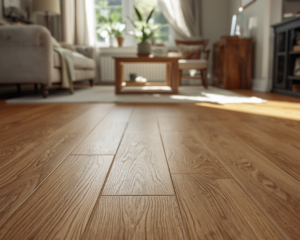
Area rugs are useful for protecting hardwood in busy parts of the home.
However, they can also hide the difference between protected flooring and exposed flooring.
When a rug remains in one place for several years, the hardwood underneath receives less foot traffic and sunlight.
Once the rug is moved, the surrounding floor may look more worn or faded.
This does not necessarily mean the exposed hardwood is dirty.
The two sections have simply experienced different conditions.
Rotating rugs periodically can help distribute wear more evenly.
Safe-Dry® also provides rug cleaning services for homeowners who want to maintain area rugs while caring for nearby flooring.
Area rugs frequently sit on top of hardwood.
This creates an important relationship between the two surfaces.
A rug can protect hardwood from direct foot traffic, but dirt underneath the rug may become abrasive.
Fine particles can collect beneath the rug and move slightly whenever people walk across it.
Vacuum around rugs regularly and clean underneath them periodically when the manufacturer recommends it.
Professional area rug cleaning may also help when the rug itself becomes heavily soiled.
Delicate Oriental rug cleaning often requires specialized care because dyes, fibers, and construction can vary significantly.
Caring for both the rug and the wood beneath it can help keep the entire room looking better.
A good cleaning routine does not need to be complicated.
Start by removing loose debris.
Use a soft broom, microfiber dust mop, or vacuum attachment designed for hard flooring.
Pay special attention to entrances, kitchen walkways, hallways, and areas around furniture.
Next, inspect the floor for spills, sticky spots, or other problem areas.
Treat those areas with a product appropriate for the specific hardwood finish.
When damp cleaning is needed, use controlled moisture rather than soaking the floor.
Follow the cleaning product label and flooring manufacturer’s recommendations.
Work in manageable sections so you can see whether streaks or residue are forming.
Allow the surface to dry and keep unnecessary foot traffic off the floor during that time.
Finally, inspect the floor from several angles.
If the floor still looks dull despite proper cleaning, buildup, scratches, or worn finish may need additional attention.
Dry soil removal should usually come before moisture.
This is the same principle used in other cleaning services.
Professional carpet cleaning works more effectively when loose debris is managed appropriately, and hardwood cleaning benefits from the same logic.
If sand and dust remain on the floor, a damp mop can move those particles around.
Vacuuming or dust mopping first makes the next step more effective.
Use a vacuum attachment that will not scratch the floor.
Avoid beater bars or components that the flooring manufacturer advises against.
One of the easiest ways to protect hardwood is to clean spills promptly.
Water, juice, pet accidents, and other liquids should not sit on the floor longer than necessary.
Blot the spill with an absorbent cloth.
Then clean any remaining residue using a product compatible with the floor finish.
Avoid excessive scrubbing.
If liquid reaches gaps between boards, absorb as much moisture as practical.
Quick action can reduce the chance of staining or moisture-related problems.
A quality entry mat can do more for hardwood than many homeowners realize.
The mat captures grit before shoes carry it farther into the home.
Place mats at frequently used exterior doors.
Clean the mats regularly so accumulated dirt does not become a new source of debris.
You may also want to create a shoe-removal area near the entrance.
Reducing soil at the door helps hardwood, carpet, and area rugs throughout the home.
Furniture pads are easy to install and easy to forget.
Check them periodically.
A worn felt pad may stop providing protection. A pad filled with sand or grit can actually scratch the flooring.
Replace damaged protectors as needed.
Pay special attention to dining chairs because they move frequently.
This small maintenance habit can help reduce many of the scratches that make hardwood look worn.
Pet nails can contribute to scratches in high-activity areas.
Dogs running toward the door, sliding around corners, or playing indoors may place additional pressure on the floor.
Keeping nails properly trimmed can reduce the severity of scratching.
Also wipe dirty paws when pets come indoors.
These habits benefit hardwood while also reducing the amount of debris reaching carpet and upholstery.
Routine hardwood maintenance works well for dust, light soil, fresh spills, and everyday buildup.
However, some situations need more than household cleaning.
If the floor remains cloudy after proper cleaning, there may be layers of residue present.
If the entire surface has become dull, professional deep cleaning services may help determine whether soil and buildup can be removed.
If the finish is physically worn, cleaning may improve the surface but will not restore missing finish.
Deep scratches, discoloration, water damage, or structural changes may require repair or refinishing.
Knowing when to stop experimenting can help protect the flooring from unnecessary treatments.
Hardwood is often only one of several surfaces in a home.
A typical living space might include wood flooring, area rugs, upholstered furniture, carpeted bedrooms, and tile.
Dust and debris travel between all of them.
Someone walks from carpet onto hardwood. A dog moves from an area rug to the sofa. Fine soil enters through the front door and spreads across multiple rooms.
Because of this, maintaining the entire home can help reduce the amount of debris reaching hardwood.
Vacuum rugs regularly.
Schedule upholstery cleaning when furniture has accumulated soil.
Use professional carpet cleaning when vacuuming no longer provides the level of cleaning you want.
Keeping several surfaces maintained creates a cleaner overall environment.
Homeowners searching for hardwood cleaning may also need carpet cleaning services in nearby rooms.
Bedrooms may have carpet while hallways and living spaces have wood.
A professional carpet cleaning service can help address carpeted areas while hardwood receives its own appropriate care.
Local homeowners may search for carpet cleaning Shavano Park, carpet cleaning Shavano Park Texas, Shavano Park carpet cleaning, carpet cleaners Shavano Park, or carpet cleaners Shavano Park Texas.
Others may search for carpet cleaning near you, carpet cleaners near you, or a carpet cleaner near you.
Safe-Dry® serves homeowners in Shavano Park, Texas, 78231 with professional home cleaning services, including carpet care and related surface cleaning.
Visit Safe-Dry® of Shavano Park
A pet accident may begin on carpet and end up affecting nearby hardwood.
For example, urine near the edge of a rug may seep onto the flooring beneath it.
A dog may step into a wet area and track residue across another surface.
Pet stain removal therefore sometimes involves more than one material.
Professional pet urine removal, pet odor removal, dog urine removal, cat urine removal, urine odor removal, carpet odor removal, and pet stain and odor removal may help with carpeted areas.
The hardwood still needs its own cleaning approach.
Trying to remove pet smell from carpet while ignoring contamination on nearby hard flooring may leave odor behind.
A whole-room evaluation can be useful when the source is unclear.
Homeowners often compare multiple services when planning a larger home refresh.
Carpet cleaning prices, carpet cleaning cost, hardwood cleaning prices, rug cleaning, upholstery cleaning, and stain treatment can vary depending on the amount of work involved.
A lightly used bedroom carpet requires different service than a heavily soiled living room with pet accidents.
Likewise, routine hardwood cleaning differs from treating layers of residue across a large floor.
Homeowners may search for affordable carpet cleaning, cheap carpet cleaning, carpet cleaning deals, carpet cleaning specials, carpet cleaning coupons, or a carpet cleaning estimate.
The lowest advertised price is not always the most important factor.
Ask what the service includes.
Find out whether stain removal service, pet treatment, or other cleaning is priced separately.
A free carpet cleaning quote or service estimate can help you compare the work more accurately.
Professional cleaning should make the process easier, not more confusing.
When comparing carpet cleaners or hardwood cleaning providers, ask what surfaces they regularly clean.
Explain the condition of the floor.
Mention previous products you have used, especially polish, wax, heavy detergent, or other treatments.
Ask whether the technician will evaluate the flooring before beginning.
For carpeted areas, homeowners may search for best carpet cleaning, top rated carpet cleaning, professional carpet cleaning, certified carpet cleaning, insured carpet cleaning, or eco friendly carpet cleaning.
Those searches are useful starting points, but communication and proper service evaluation matter just as much.
If you need same day carpet cleaning or emergency carpet cleaning because of an unexpected spill or event, ask about scheduling availability directly.
Hardwood cleaning often involves relatively small amounts of product, but safe handling still matters.
Read labels before use.
Follow dilution directions.
Do not mix cleaning chemicals.
Make sure the product is approved for the intended surface.
The EPA advises homeowners to use cleaning products according to manufacturer directions, avoid mixing chemicals, and provide ventilation when appropriate.
The EPA also recommends considering products with the Safer Choice label when homeowners are looking for products that meet its ingredient and performance criteria.
These guidelines are helpful throughout the home, whether you are cleaning hardwood, countertops, carpet spots, or other surfaces.
Several factors can cause this.
Cleaning product residue may remain behind. Too much cleaner may have been used. Dirty mop water may be redistributing soil. Fine scratches can also reduce shine.
Start by reviewing your cleaning method and the products being used.
If the dullness remains after proper maintenance, professional hardwood floor cleaning may help determine whether deeper buildup is present.
Yes.
Excess cleaning solution can leave residue after the floor dries.
Repeated applications may gradually create visible haze.
Follow product dilution directions and avoid assuming that a stronger solution will clean better.
Excess water can create problems.
Moisture may enter seams, scratches, or worn sections of finish.
Standing water should be removed promptly.
Use controlled moisture rather than soaking hardwood during cleaning.
The schedule depends on household activity.
High-traffic homes with pets or children may need frequent dry soil removal.
Damp cleaning can be performed as needed according to the flooring manufacturer’s recommendations.
Instead of following a rigid calendar, pay attention to visible dust, spills, and buildup.
Vacuuming can be a useful way to remove fine dry soil when the correct hard-floor attachment is used.
Check the vacuum and flooring manufacturer instructions to make sure the equipment will not scratch the surface.
Sticky flooring can indicate too much cleaning product, improper dilution, or residue that was not removed.
A dirty mop can also redistribute material.
Review the product instructions and avoid adding more cleaner until you understand what is causing the problem.
Do not automatically assume a homemade vinegar solution is safe for every hardwood floor.
Different finishes require different care.
Follow the flooring manufacturer’s cleaning recommendations rather than applying a general DIY recipe to an unknown finish.
Cleaning can remove dirt from around scratches and improve the overall appearance, but it cannot physically repair deep damage.
Scratch repair may require a different restoration process.
Hallways typically receive heavy foot traffic.
Repeated friction, grit, and small scratches can reduce shine faster in these areas than in low-use rooms.
Regular soil removal can help slow this process.
Pets can contribute to scratches, soil, and moisture.
Keeping nails maintained, wiping paws, and responding quickly to accidents can help protect the flooring.
Absorb the liquid quickly and clean the area according to the flooring manufacturer’s recommendations.
Avoid saturating the area with additional water.
If urine reaches nearby carpet or rugs, pet stain and odor removal may also be needed.
Yes, area rugs can help reduce direct foot traffic and scratching.
However, soil can collect underneath them.
Vacuum and clean around rugs regularly, and use appropriate rug pads recommended for hardwood.
The flooring under the rug may have received less sunlight and foot traffic.
Color differences can develop over time.
This is not always something cleaning can correct.
Yes.
Furniture legs can scratch wood when moved directly across the surface.
Use appropriate floor protectors and check them regularly for wear or trapped grit.
Professional cleaning may be useful when routine maintenance no longer removes cloudy buildup, oily soil, or general dullness.
It is also worth considering when you are unsure which household product caused residue.
If the finish itself is worn or damaged, professional evaluation can help determine whether cleaning or restoration is the better option.
That depends on the services offered by the cleaning company.
Homes often contain multiple flooring types, so asking about carpet cleaning, hardwood floor cleaning, area rug cleaning, and upholstery cleaning during the same service inquiry can be convenient.
Not necessarily.
Price should be considered alongside the work being performed.
Affordable carpet cleaning should still address the needs of the carpet and provide clear information about the service.
Ask for an estimate and understand what is included before deciding.
Carpet deodorizing can help when the odor source is properly addressed.
However, simply adding fragrance may not resolve urine or other contamination.
Pet odor elimination is most effective when the actual source receives appropriate treatment.
Hardwood floors are meant to add warmth and character to a home, but everyday life can slowly change their appearance.
Dust settles. Shoes bring in grit. Pet paws track debris. Furniture creates scratches. Cleaning products leave residue. Moisture reaches vulnerable areas, and repeated foot traffic gradually wears the finish.
Fortunately, not every dull floor needs major restoration.
Consistent dry soil removal, careful product use, controlled moisture, clean tools, furniture protection, and prompt spill cleanup can help hardwood stay cleaner for longer.
When regular household cleaning is no longer enough, professional hardwood floor cleaning may help address buildup that ordinary mopping leaves behind.
Safe-Dry® serves families throughout Shavano Park, Texas, 78231 with professional cleaning solutions designed around the needs of busy homes. Whether your hardwood has lost its clean appearance or you also need carpet cleaning, rug cleaning, upholstery cleaning, or pet stain treatment in nearby rooms, getting the right service can make maintaining your home much easier.
Instead of continuing to mop over cloudy residue or guessing which cleaner to try next, connect with Safe-Dry® of Shavano Park.
Request a quote, schedule service, and give your floors the professional attention they need to look cleaner, fresher, and more cared for. Connect with Safe-Dry® of Shavano Park